If Denver has ever felt hard to pin down, you are not imagining it. In one part of the city, you can find dense blocks, mixed-use buildings, and strong transit connections. In another, you may see lower-scale homes, quieter residential streets, and faster routes toward the foothills. If you are trying to decide where you fit, understanding Denver through its urban, suburban, and foothill-access areas can make your search much clearer. Let’s dive in.
Why Denver Feels Both Urban and Suburban
Denver is not best defined by a single label. According to the city’s planning framework and neighborhood data resources, Denver includes 78 statistical neighborhoods and uses planning contexts such as Downtown, Urban, Urban Edge, General Urban, Urban Center, and Suburban to describe how different areas function.
That matters because these contexts are based on built form, land use, mobility, and access to daily needs. In other words, Denver is designed to support different lifestyles across the city, not force every neighborhood into the same mold.
If you are comparing areas, this approach can be more useful than asking whether Denver is urban or suburban. A better question is: what kind of daily experience do you want?
Denver by Planning Context
Downtown Means Density and Activity
Blueprint Denver describes Downtown as the city’s densest and most active context. It has the highest residential intensity, the largest employment center, strong street activation, and high-capacity transit access.
For you as a buyer or seller, that usually means a housing mix that leans toward condos, apartments, mixed-use buildings, and live/work spaces. Detached homes are less common here, and the lifestyle often centers on shorter trips, nearby amenities, and strong transportation options.
Urban Areas Blend Homes and Walkability
Denver’s Urban context includes small multi-unit residential and mixed-use areas set within one- and two-unit neighborhoods. These places often have short, predictable blocks and a more walkable layout.
This can appeal to you if you want a residential feel without giving up access to local services or mixed-use corridors. In practical terms, these areas often offer more variety in housing than a purely detached-home neighborhood.
Urban Edge Offers a Transitional Feel
The Urban Edge context acts as a bridge between more urban and more suburban parts of Denver. City materials describe it as mostly residential, with low-scale single- and two-unit homes, some small multi-unit buildings, and commercial activity along major corridors.
This is often where Denver’s so-called “missing middle” housing shows up. You may see duplexes, triplexes, rowhouses, small apartment buildings, and detached homes all within the same broader area. If you want options and a lower-scale feel, Urban Edge can be worth a close look.
Suburban Areas Still Feel Like Denver
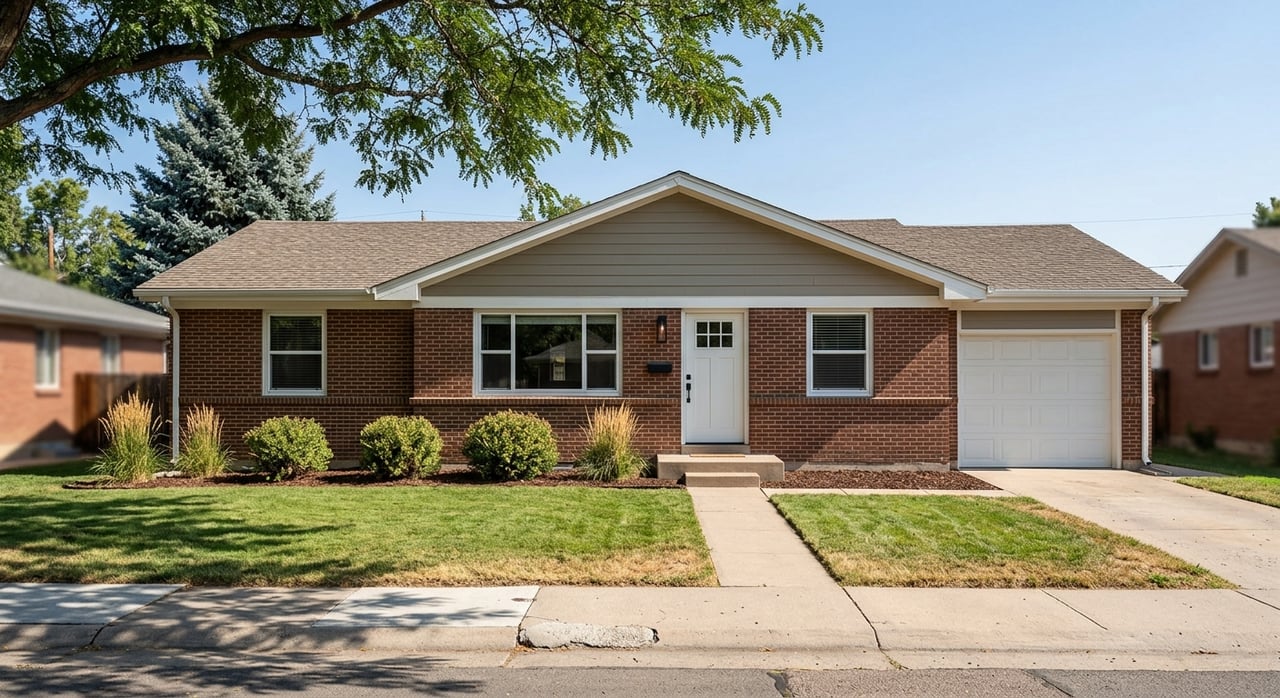
Denver’s Suburban context is the city’s most varied, but Blueprint Denver says it is still largely made up of single-unit housing, with commercial activity focused on main corridors and centers.
What is interesting is that Denver’s suburban areas are still described as more urban in nature than traditional suburban development elsewhere in the metro. So if you picture endless outer-ring sprawl, that may not match what you actually find inside Denver city limits.
The city’s recent housing policy also adds more flexibility over time. Denver’s 2024 update allows accessory dwelling units in all residential areas of the city, which means some traditionally single-unit blocks may gradually offer additional housing choices.
What Housing Patterns Mean for You
The easiest way to understand Denver’s layout is to connect housing type with lifestyle.
- Downtown often fits buyers who want density, mixed-use living, and strong transit access.
- Urban areas can work well if you want walkability and a mix of housing options.
- Urban Edge areas may suit you if you want a lower-scale neighborhood feel with some variety in home types.
- Suburban areas usually appeal to buyers looking for more detached homes and corridor-based shopping or services.
This does not mean one option is better than another. It simply helps you narrow your search based on how you want your week to feel, from commuting and errands to recreation and home style.
Commutes in Denver Are About More Than Freeways
When you think about commuting in Denver, it helps to look beyond drive times alone. The citywide U.S. Census QuickFacts baseline shows a mean travel time to work of 24.9 minutes, along with an owner-occupied housing rate of 48.8% and a median owner-occupied home value of $616,000.
Those numbers are citywide averages, not neighborhood-level rules. Still, they give you a useful starting point when comparing locations and housing choices.
Denver planning also treats transit-oriented development as an attractive and walkable model that supports transportation choice. So in many parts of the metro, your commute may be shaped as much by access to a rail station as by how quickly you can get onto a highway.
Rail Access Can Change the Equation
RTD’s rail network plays a real role in how buyers compare neighborhoods and nearby suburbs. Current service includes the A Line from Union Station to Denver International Airport, the B Line from Union Station to Westminster, and the W Line from Union Station through Denver, Lakewood, and Golden.
That means two homes with similar square footage can feel very different in daily life if one is closer to rail access. For some buyers, especially relocating professionals or households with changing work patterns, transit convenience can be a key part of the decision.
Foothill Access Is Strongest on the West Side
If mountain access is part of your lifestyle, west-side positioning matters. According to CDOT’s I-70 mountain corridor overview, I-70 is Colorado’s only east-west interstate and a major gateway to mountain communities.
That is why buyers who prioritize skiing, hiking, weekend trips, or a quicker path toward the foothills often focus on west Denver and nearby west-side communities. The route west is not just a map detail. It can shape how easy it feels to turn a free Saturday into a day in the mountains.
CDOT also notes that the I-70 mountain corridor can be a challenging drive, so checking road and weather conditions before traveling is always smart. Access is valuable, but so is understanding the reality of mountain travel.
How Nearby Areas Help You Compare
Sometimes the clearest way to understand Denver is to compare it with nearby communities.
The research points to a few helpful examples:
- Aurora is a large east and southeast suburban option with a wide range of neighborhoods and a location on the eastern edge of the Denver-Aurora metro area.
- Littleton reflects more of a first-tier suburb pattern with direct rail access to Denver and major trail connections.
- Westminster offers a suburban setting with B Line commuter rail access and trail links toward Boulder and downtown Denver.
These examples show that “suburban” around Denver can mean very different things. Some areas are transit-oriented. Some are more car-focused. Some offer easier access to foothill recreation than to downtown employment centers.
A Simple Way to Narrow Your Search
If you are trying to figure out where to focus, this shorthand can help:
Choose urban if you want density
Urban and downtown contexts may be a better fit if you value:
- Higher-density housing
- Mixed-use buildings
- More transit options
- A more active street environment
Choose urban edge if you want balance
Urban Edge may make sense if you want:
- Lower-scale residential blocks
- A mix of detached and attached housing
- Access to commercial corridors without a full urban-core feel
Choose suburban if you want more detached homes
Suburban contexts are often a good match if you are looking for:
- More single-unit homes
- Residential areas with corridor-based retail and services
- A car-friendly version of city living
Choose west-side access if mountains matter
West-side locations may rise to the top if you care most about:
- Easier foothill access
- More direct routes toward I-70
- A lifestyle tied to hiking, skiing, or mountain travel
Why This Matters for Buyers and Sellers
For buyers, understanding these patterns helps you avoid searching too broadly. Instead of looking at every corner of Denver the same way, you can focus on the built environment, commute style, and access priorities that actually fit your routine.
For sellers, this framework can also help shape how your home is positioned in the market. A property near transit, in a lower-scale urban edge area, or with easier west-side access may appeal to different buyers for different reasons.
Denver is a city with layers, and that is part of its appeal. You do not need to force it into one category. You just need to find the part of it that matches how you want to live.
If you want help narrowing down the right Denver-area fit, from city neighborhoods to suburban communities and foothill-access locations, connecting with Arlene Burgess is a smart next step.
FAQs
What does “urban” mean in Denver real estate?
- In Denver, “urban” usually refers to areas with a mix of housing types, more walkability, shorter blocks, and easier access to mixed-use corridors or transit.
What does “suburban” mean inside Denver city limits?
- In Denver, suburban areas are still often more city-like than traditional outer-ring suburbs, with mostly single-unit housing and commercial activity concentrated along corridors and centers.
Which Denver areas offer the best foothill access?
- West-side Denver and nearby west-of-Denver locations generally offer the most direct access to the foothills and to I-70, which is a key route toward mountain communities.
Is rail access important when choosing a Denver home?
- Yes. For many buyers, proximity to lines like the A, B, or W Line can be just as important as freeway access when comparing commute options and daily convenience.
How can Denver buyers choose between urban, suburban, and foothill-access areas?
- A good starting point is to compare your priorities around housing type, commute style, transit access, and how often you want quick access to foothill or mountain recreation.