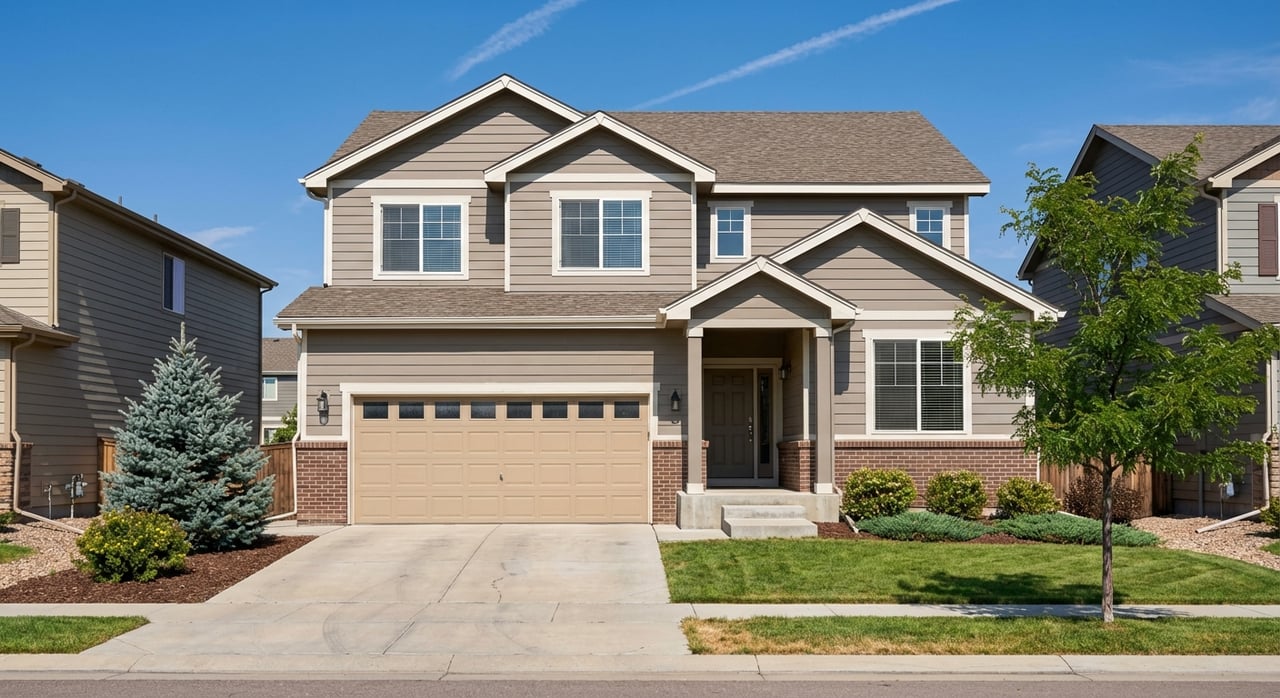
Catching early flights, late returns, and tight connections is a lot easier when home is set up for airport access. If you fly often for work, Aurora gives you a strong mix of routes, rail connections, and newer neighborhoods that make travel feel routine, not stressful. In this guide, you’ll see the practical ways to reach Denver International Airport (DEN), how different Aurora areas stack up, and smart routines that save you time and money. Let’s dive in.
Why Aurora works for frequent flyers
Aurora sits on Denver’s eastern side and spans nearly 160 square miles, so your exact airport time depends on where you live. Many Aurora neighborhoods fall in a general range of about 15 to 35 minutes to DEN in off-peak conditions, with travel varying by time of day and weather. As a simple reference point, a central Aurora to DEN trip is roughly 18 miles and about 24 minutes in light traffic, though your timing will vary by neighborhood. You’ll get the most predictable access by living near key corridors like Peña Boulevard, E‑470, or I‑225, or near RTD rail transfer points.
How to reach DEN fast
Drive via E‑470 and Peña
If you want door-to-door control, driving is the most common choice. Major routes include Peña Boulevard, I‑70, I‑225, and the E‑470 tollway. Many frequent travelers choose E‑470 for predictable travel at the cost of tolls. If you drive this route often, consider setting up an account and checking the E‑470 toll calculator so you can plan true costs and routing.
As you compare neighborhoods, test your typical departure windows. Morning flights, snow days, and evening returns can add variance. For a big-picture reference, see TravelMath’s driving time and drive distance between Aurora and DEN, then add a real-time buffer.
Take RTD rail connections
RTD’s A Line runs between Denver Union Station and the airport’s transit center next to the Jeppesen Terminal. The A Line ride is commonly cited at about 37 minutes end to end. If you live near Aurora’s R Line stations, you can use the R Line to connect toward the A Line or pair rail with a short rideshare for a smooth trip. Get the route overviews for the A Line and R Line, then confirm current schedules and fares before you go.
Rail shines when you value predictable timing and want to skip parking. It also pairs well with the on-site Westin hotel if you prefer to overnight at the airport before an early flight.
Use rideshare the right way
DEN organizes rideshare pickup in defined zones so your exit is simple. Meet your driver on Island 5, Level 5 of the Jeppesen Terminal on the east or west side, and follow the prompts in your app. For exact pickup details, check DEN’s official rideshare instructions.
Rideshare gives you door-to-door convenience. Costs can vary with surge pricing and traffic, so compare it against rail or driving if you travel often.
Choose parking or rentals
If you park at the airport, you’ll find East and West garages, economy lots, and Premium Reserve options. DEN also operates a cell phone waiting lot, called “Final Approach,” which is useful for pickups. Always verify current rates and lot status on DEN’s parking page. For longer trips, compare off-airport operators with shuttle service, such as Park2Jet, which can be cost-effective.
If you rent at your destination, DEN’s consolidated rental car facility is served by frequent shuttles from Level 5. Review procedures on the airport’s rental car guide so you can budget time for the shuttle segment.
Neighborhoods that make travel easy
You have several Aurora areas that frequent flyers often consider. Focus on your typical travel windows and your other daily routes, like trips to the office, medical campus, or retail.
- Southeast Aurora near E‑470 and Smoky Hill: These neighborhoods offer newer housing and quick access to E‑470 and Peña Boulevard. The Southlands area provides suburban conveniences that can make week-to-week travel smoother.
- Murphy Creek: East of central Aurora with E‑470 access points nearby. Many residents value the combination of newer subdivisions and predictable tollway driving.
- The Aurora Highlands: A large, master-planned community designed with connectivity to major corridors and newer construction. Explore the community overview on The Aurora Highlands site.
- Central Aurora and the Anschutz area: If you split time between flights and the University of Colorado Anschutz Medical Campus, living near the medical district can reduce daily commuting while still keeping DEN within reach. Learn more about the campus context through university resources like this CU Denver and Anschutz update.
Nearby employment centers also shape your choice. Buckley Space Force Base is a significant employer in Aurora and may pull your daily route toward central or east neighborhoods. See a quick overview of the base on Buckley Space Force Base’s page.
Housing costs and home types
Aurora has a wide mix of single-family homes, townhomes, condos, and apartments. Newer master-planned neighborhoods are more common in the east and southeast, while more established areas sit closer to central and western Aurora. Citywide, the U.S. Census Bureau’s QuickFacts lists an owner-occupied rate around 62.4%, a median owner-occupied home value near $469,100, and a median gross rent around $1,835. These are 5-year American Community Survey estimates and are time-sensitive, so you should verify current market data before you decide. You can view Aurora’s city profile on Census QuickFacts.
When comparing neighborhoods, focus less on one-off listing prices and more on patterns: travel predictability to DEN, access to E‑470 or rail stations, and how well the area fits your weekly routine.
Noise and flight paths
If you are buying or renting near the airport or under a flight corridor, take a close look at address-specific flight activity. DEN supports a Noise Office and a public flight-tracking tool so you can see typical flight tracks for any location. Use the airport’s Noise & Airspace resources to research a property and, if needed, contact the Noise Office with questions.
Smart travel routines that save time
Build a repeatable airport plan tailored to your schedule:
- Set a weather and traffic buffer for peak hours and winter.
- If you use E‑470 often, create an account and pre-calc costs with the E‑470 toll calculator.
- Choose a parking plan for each trip length. Compare DEN garage, economy, and Premium Reserve options with an off-airport shuttle provider’s pricing.
- For downtown meetings, consider the A Line to skip traffic and parking.
- Save DEN’s rideshare pickup details so your arrivals are quick.
- If you are evaluating a new address, check flight tracks with DEN’s Noise & Airspace tools.
Work hubs and commute balance
Many Aurora residents split time between flights and local job centers. The Anschutz Medical Campus anchors a major employment district in central Aurora. The Denver Tech Center is reachable from parts of Aurora via I‑225 and I‑25, which can make southeast neighborhoods efficient for both the airport and the DTC. If you work at Buckley Space Force Base, weigh your base commute against your DEN routine to avoid crisscrossing the city during rush hour.
A simple weekly rhythm
Here is one way frequent flyers in Aurora keep travel easy:
- Sunday: Check the week’s flights, weather, and rail schedules. If you will drive, pre-book Premium Reserve or an off-airport shuttle lot for longer trips.
- Night before: Confirm your route. If you use E‑470, check any closures and toll estimates.
- Departure day: Leave a consistent buffer based on your neighborhood and time of day. If taking rail, target the A Line arrival that gets you to DEN at least 90 minutes before boarding for domestic flights.
- Arrival day: Save your rideshare pickup steps and confirm Island 5, Level 5 in the app. If someone is picking you up, use the cell phone lot at Final Approach.
Ready to tailor this to your travel and home search? Connect with a local expert who understands both the logistics and the lifestyle. Reach out to Arlene Burgess to map your neighborhood shortlist and a smooth airport routine.
FAQs
How long does it take to reach DEN from Aurora?
- Many Aurora areas fall in a general range of about 15 to 35 minutes in off-peak conditions, with a central Aurora to DEN trip around 18 miles and about 24 minutes; always add a buffer for traffic and weather and consider E‑470 for more predictable timing.
Is the RTD A Line better than rideshare to DEN?
- The A Line offers predictable timing and can be cost-effective, especially if you travel to or from downtown; rideshare is door-to-door but can vary in time and price, so compare both with the A Line overview and DEN’s rideshare guidance.
Where do I meet rideshare at DEN?
- Follow app prompts and meet drivers on Island 5, Level 5 of the Jeppesen Terminal on the east or west side; see DEN’s official pickup details for the latest instructions.
What are my parking options at DEN?
- DEN operates garages, economy lots, and Premium Reserve parking, plus a cell phone waiting lot; compare official rates on the airport’s parking page with off-airport shuttle providers, which can be more budget-friendly for longer trips.
How can I check airport noise near a home?
- Use DEN’s Noise & Airspace tools to view flight tracks near a specific address and contact the Noise Office with any questions.